


Discover SEO RULES IN 2027 with 12 proven strategies for better Google rankings, AI search visibility, quality traffic, and business growth.
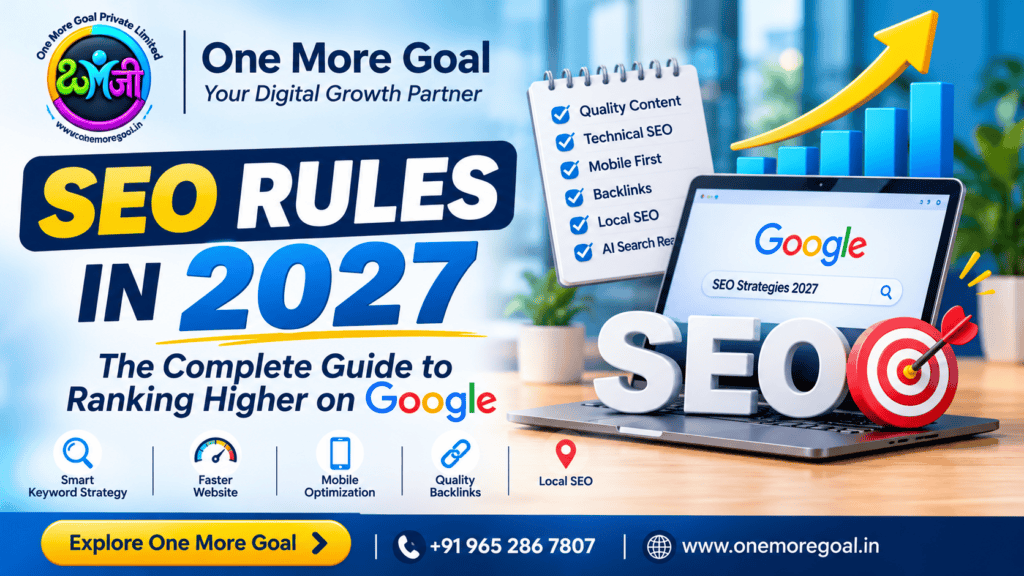
Is your website struggling to appear on Google’s first page even after publishing blogs and optimizing keywords? Many businesses invest time and money in online marketing but fail to attract consistent organic traffic because their SEO strategies are outdated. Understanding the SEO RULES IN 2027 is essential for businesses that want better search visibility, qualified website visitors, and long-term digital growth. Whether you run a startup, small business, or established company, combining effective SEO strategies with paid advertising, including google ads for business owners, can help you build a stronger online presence.
Search engines are evolving with artificial intelligence, conversational search, and increasingly user-focused results. Traditional keyword placement alone is no longer enough. Businesses need useful content, technically optimized websites, relevant back links, strong user experiences, and a clear understanding of search intent.
In this guide, we explore the latest SEO best practices, practical optimization techniques, and strategies businesses should prepare for in 2027.
What Are the SEO Rules in 2027?
SEO rules in 2027 are the best practices used to improve website visibility in search engines through helpful content, keyword optimization, technical performance, mobile-friendly design, quality back links, and AI-search readiness. Businesses should focus on satisfying user search intent, building trust, and providing valuable information rather than simply repeating keywords.
The goal is to make your website easy for search engines to understand and genuinely useful for visitors.
1. Focus on Helpful, People-First Content
SEO RULES IN 2027 Content quality remains one of the most important parts of successful SEO. Search engines aim to provide users with relevant, reliable, and helpful information.
Publishing multiple blogs without offering original value will not automatically improve rankings.
How to create people-first content:
- Understand the questions your target audience searches for.
- Provide accurate and practical answers.
- Include relevant examples and actionable solutions.
- Use clear headings and short paragraphs.
- Add original insights, case studies, and real business experiences.
- Update outdated information regularly.
For example, instead of publishing a general article about digital marketing, create a detailed guide explaining how digital marketing helps small businesses generate leads and increase sales.
Google emphasizes helpful, reliable, people-first content rather than content created primarily to manipulate search rankings.
2. Perform Smart Keyword Research and Optimization
Keyword research helps businesses understand what potential customers are searching for online.
In 2027, keyword optimization should focus on search intent, relevant topics, and natural language instead of keyword stuffing.
Important keyword types:
Primary keywords: The main search terms you want a page to rank for.
Secondary keywords: Related phrases that support the main topic.
Long-tail keywords: Specific search queries that often indicate stronger user intent.
Local keywords: Location-based phrases that help businesses reach nearby customers.
For example, a digital marketing company can target:
- SEO services for small businesses
- Digital marketing services
- Website development company
- Google Ads management services
- google ads for business owners
- Local SEO services in Hyderabad
Best keyword optimization practices:
- Place the primary keyword in your SEO title.
- Include it naturally in the introduction.
- Use relevant keywords in H2 and H3 headings.
- Add descriptive keywords to image alt text.
- Include your keyword in the URL slug where appropriate.
- Use related phrases naturally throughout the content.
Avoid forcing keywords into every paragraph. Content should always sound natural and provide value to readers.
3. Optimize Your Website for AI Search and AI Overviews
SEO RULES IN 2027 Artificial intelligence is changing how people discover information online.
Users increasingly interact with AI-powered search experiences to find answers, compare products, research services, and understand complex topics.
This makes AI-search visibility an important consideration in modern SEO strategies.
How to optimize content for AI-powered search:
- Answer common questions directly.
- Use descriptive headings and organized sections.
- Include accurate facts and trustworthy references.
- Explain complex topics in simple language.
- Add relevant statistics and examples when verified.
- Build topical authority through related articles.
- Make important website content accessible as text.
A useful approach is to create question-based headings such as:
- What is SEO?
- How does SEO help businesses?
- Why is keyword research important?
- What are the latest SEO strategies?
Google’s guidance for AI features emphasizes the importance of existing SEO fundamentals. There is no guaranteed special AI-ranking shortcut or separate AI schema required to appear in AI Overviews.
4. Improve Website Loading Speed and Core Web Vitals
Website performance directly influences how visitors experience your business online.
A slow website can frustrate users, increase abandonment, and reduce conversions.
In 2027, businesses should continue prioritizing fast-loading, responsive, and technically sound websites.
Important website performance factors:
Largest Contentful Paint (LCP): Measures how quickly the main content becomes visible. A good target is 2.5 seconds or less.
Interaction to Next Paint (INP): Measures how quickly a page responds to user interactions. A good target is 200 milliseconds or less.
Cumulative Layout Shift (CLS): Measures unexpected layout movement. A good target is 0.1 or less.
These are Google’s Core Web Vitals thresholds.
Ways to improve website performance:
- Compress large images.
- Use modern image formats such as WebP.
- Enable browser caching.
- Reduce unnecessary scripts.
- Choose reliable hosting.
- Optimize CSS and JavaScript.
- Use a content delivery network when appropriate.
- Test website performance using Google PageSpeed Insights.
A fast and stable website provides a better browsing experience and supports your overall SEO strategy.
5. Make Mobile SEO a Priority
Most customers use smartphones to search for products, services, and businesses.
If your website does not work properly on mobile devices, you may lose valuable visitors and potential customers.
Google primarily uses the mobile version of website content for indexing and ranking.
Mobile SEO best practices:
- Use responsive website design.
- Make text easy to read.
- Keep buttons large enough to tap.
- Avoid intrusive pop-ups.
- Optimize images for mobile screens.
- Ensure navigation is simple.
- Test website pages across different devices.
A mobile-friendly website makes it easier for customers to explore your services, contact your business, and complete purchases.
6. Build High-Quality Back links and Website Authority
Back links are links from other websites pointing to your website. They can help search engines discover your content and understand its relevance and reputation.
However, not all back links provide the same value.
A few relevant links from trustworthy websites are generally more useful than hundreds of low-quality or unrelated links.
Effective back link-building strategies:
- Publish original research and useful resources.
- Write guest articles for relevant websites.
- Collaborate with industry publications.
- Participate in relevant business communities.
- Create shareable guides and info graphics.
- Build relationships with reputable websites.
Avoid buying spam my back links or participating in link schemes. Focus on earning relevant links through valuable content and genuine relationships.
7. Strengthen Local SEO and Google Business Profile
Local SEO helps businesses appear when customers search for services in a specific location.
For example, someone searching for a digital marketing agency in Hyderabad is more likely to be interested in businesses serving that area.
An optimized Google Business Profile can improve your local online presence.
Local SEO optimization checklist:
- Complete your Google Business Profile.
- Maintain accurate business contact details.
- Select relevant business categories.
- Add genuine business photographs.
- Publish regular updates.
- Encourage authentic customer reviews.
- Respond professionally to customer feedback.
- Maintain consistent business information across online directories.
- Create location-specific website pages when they offer genuine value.
Local SEO is particularly useful for service providers, retail businesses, restaurants, and companies targeting customers in specific geographical areas.
8. Optimize Images and Videos for Search Engines
Images and videos make website content more engaging and easier to understand.
However, large media files and poorly optimized images can affect website performance and accessibility.
Image SEO best practices:
- Use descriptive image filenames.
- Write meaningful alt text.
- Compress images without compromising quality.
- Use appropriate image dimensions.
- Prefer modern image formats.
- Add relevant images that support the topic.
For example, an image about SEO optimization can use this alt text:
“SEO RULES IN 2027 showing modern search engine optimization strategies for business websites.”
Video SEO best practices:
- Create descriptive video titles.
- Add accurate descriptions.
- Include captions and transcripts.
- Use relevant video thumbnails.
- Embed videos where they help explain the topic.
Well-optimized visual content can make your website more accessible and create additional opportunities for search discovery.
9. Use Structured Data and Schema Markup
Structured data helps search engines understand specific information on your website.
It uses standardized formats to describe content such as articles, products, organizations, events, and other eligible information.
Useful schema types:
- Article schema
- Organization schema
- LocalBusiness schema
- Product schema
- BreadcrumbList schema
- VideoObject schema
For example, adding appropriate Article schema can help search engines understand your blog’s headline, author, publication date, and other relevant details.
Always ensure that your structured data accurately reflects the visible content on the page.
Schema markup does not guarantee rich results or higher rankings, but it can help search engines interpret eligible content.
10. Understand Search Intent and Create Topic Clusters
Search intent refers to the reason behind a user’s search query.
Understanding intent helps you create content that matches what potential customers actually want.
Four major types of search intent:
Informational intent: Users want to learn something.
Example: What is SEO?
Navigational intent: Users want to find a particular website or brand.
Example: One More Goal website.
Commercial investigation: Users are researching options before making a decision.
Example: Best digital marketing agencies for small businesses.
Transactional intent: Users are ready to take action.
Example: Hire an SEO agency.
What are topic clusters?
Topic clusters are groups of related articles connected through internal links.
For example, a digital marketing website can create a main pillar page about digital marketing and connect it with supporting articles about SEO, social media marketing, Google Ads, content marketing, and website development.
This approach helps visitors discover related information while helping search engines understand the website’s content structure.
11. Combine SEO with Google Ads for Business Owners
SEO and paid advertising are two different
, but they can work together to support business growth.
SEO helps businesses build long-term organic visibility, while Google Ads can generate paid visibility for selected search queries.
For google ads for business owners, paid campaigns can be useful when businesses want to promote specific services, reach targeted audiences, or generate leads within a planned advertising budget.
SEO vs Google Ads
| SEO | Google Ads |
|---|---|
| Builds organic search visibility | Provides paid advertising visibility |
| Focuses on long-term growth | Can generate traffic soon after campaigns launch |
| Does not charge per organic click | Advertisers pay according to campaign bidding and billing settings |
| Requires ongoing content and technical optimization | Requires campaign management and budget monitoring |
| Builds website authority over time | Helps target specific search audiences |
How businesses can use both strategies:
- Use keyword research to identify customer search queries.
- Create SEO-friendly service pages and blogs.
- Run Google Ads for relevant high-intent keywords.
- Compare paid and organic search performance.
- Optimize landing pages for conversions.
- Use performance data to improve marketing decisions.
Remember that advertising does not directly improve organic rankings. SEO and Google Ads should have separate goals and measurement strategies.
12. Track SEO Performance Using Analytics Tools
SEO is not a one-time activity. Businesses need to monitor performance and continuously improve their strategies.
Tracking the right metrics helps identify which pages are performing well and which need attention.
Important SEO performance metrics:
- Organic website traffic
- Keyword rankings
- Search impressions
- Organic click-through rate (CTR)
- Website conversions
- Back link quality
- Indexed website pages
- Core Web Vitals
- Leads generated through organic search
Recommended SEO tools:
Google Search Console: Monitor search performance, indexing, and website issues.
Google Analytics 4: Understand
, engagement, and conversions.
Google PageSpeed Insights: Evaluate website speed and Core Web Vitals.
Google Keyword Planner: Research keyword ideas and advertising search estimates.
Google Trends: Explore search interest and changing topics.
SEO RULES IN 2027 Using these tools regularly helps businesses make informed decisions instead of relying on assumptions.
Common SEO Mistakes Businesses Should Avoid in 2027
Even businesses investing in SEO can struggle because of avoidable optimization mistakes.
Here are some common issues to watch out for:
- Keyword stuffing: Repeating the same keyword excessively makes content unnatural.
- Duplicate content: Publishing substantially similar pages without a clear purpose can confuse users and search engines.
- Poor mobile experience: Difficult navigation and unreadable content can frustrate visitors.
- Ignoring technical SEO: Broken links, crawl issues, and incorrect indexing settings can affect search visibility.
- Low-quality back links: Spam my link-building practices can violate Google’s spam policies.
- Publishing AI-generated content without review: Automatically generated content that lacks originality, accuracy, or user value can perform poorly and may violate spam policies when created to manipulate rankings.
- Neglecting internal links: Visitors may struggle to discover related information.
- Ignoring analytics: Without performance tracking, it becomes difficult to identify opportunities for improvement.
Avoiding these mistakes creates a stronger foundation for sustainable organic growth.
How Can Businesses Prepare for SEO in 2027?
Businesses should develop a practical SEO strategy instead of relying on individual ranking tricks.
Here is a simple monthly SEO action plan:
Week 1: Research and Planning
- Identify primary and secondary keywords.
- Analyze competitors.
- Understand customer search intent.
- Review existing website content.
Week 2: Content Optimization
- Publish useful, original blogs.
- Optimize page titles and meta descriptions.
- Improve heading structures.
- Add internal links and descriptive image alt text.
Week 3: Technical SEO
- Check mobile responsiveness.
- Improve website speed.
- Review indexing and crawl ability.
- Test structured data.
Week 4: Performance Analysis
- Review Google Search Console.
- Analyze organic traffic.
- Identify under performing pages.
- Update and improve existing content.
Following this process consistently can help businesses identify issues, improve content quality, and strengthen their organic search strategy.
Why Choose One More Goal for Digital Marketing Growth?
Building a successful online presence requires more than publishing content. Businesses need a well-planned digital strategy that combines website development, search engine optimization, paid advertising, and effective online marketing.
One More Goal helps businesses strengthen their digital presence through strategic online marketing solutions.
Whether you want to improve website visibility, reach potential customers, generate leads, or establish a stronger online brand, having the right digital marketing strategy can make a difference.
Explore our website: https://onemoregoal.in/
Frequently Asked Questions About SEO Rules in 2027
1. What are the most important SEO rules in 2027?
The most important SEO practices include creating helpful content, understanding search intent, optimizing website performance, improving mobile usability, building relevant back links, strengthening local SEO, and maintaining technical website health.
2. Is SEO still important for businesses in 2027?
Yes. SEO remains important because customers use search engines to discover businesses, compare services, and find solutions. A well-optimized website can help businesses attract relevant organic traffic and build long-term online visibility.
3. How does AI affect SEO in 2027?
AI is changing how search results are presented and how users discover information. Businesses should create accurate, well-structured, original content that directly answers user questions and remains accessible to search engines.
4. How many keywords should a blog contain?
There is no fixed keyword density required by Google. A blog should have one clear primary topic, relevant secondary keywords, and natural variations. Keywords should be used where they help readers understand the content.
5. Does Google Ads help improve SEO rankings?
No. Google Ads does not directly improve organic search rankings. However, paid campaigns can complement SEO by providing additional visibility, attracting potential customers, and helping businesses test advertising messages.
6. How long does SEO take to show results?
SEO results depend on website condition, competition, content quality, industry, and optimization efforts. Some improvements may be noticed earlier, while meaningful organic growth can take several months. No agency can guarantee a particular ranking or timeline.
7. What tools are useful for SEO in 2027?
Google Search Console, Google Analytics 4, Google PageSpeed Insights, Google Keyword Planner, and Google Trends are useful tools for monitoring and improving different aspects of SEO.
Conclusion: Follow the SEO Rules in 2027 and Build Long-Term Online Visibility
The digital marketing landscape continues to evolve, and businesses must adapt their strategies to remain competitive. Following the SEO RULES IN 2027 means focusing on helpful content, technical optimization, mobile usability, relevant back links, AI-search readiness, and a positive user experience.
Remember that successful SEO is not about finding shortcuts to Google’s first page. It is about understanding your audience, answering their questions, and consistently providing value.
If you are a business owner looking to strengthen your online presence, start implementing these strategies today. Combine organic SEO with suitable paid advertising campaigns, including google ads for business owners, to build a balanced digital marketing approach.
Enjoyed this guide? Enjoyed this guide? Share this blog with other business owners, marketers, and entrepreneurs who want to improve their website rankings. We would also love to hear your feedback!
Share this blog with other business owners, marketers, and entrepreneurs who want to improve their website rankings. We would also love to hear your feedback!
Which SEO strategy do you think will make the biggest difference in 2027? Share your thoughts in the comments and let us know what topics you would like us to cover next.
For professional digital marketing and website growth support, connect with One More Goal today.
Website: https://onemoregoal.in/
Call: +91 965 286 7807